Buyer resource
Thin-Wall CNC Aluminum Housings for Electronics
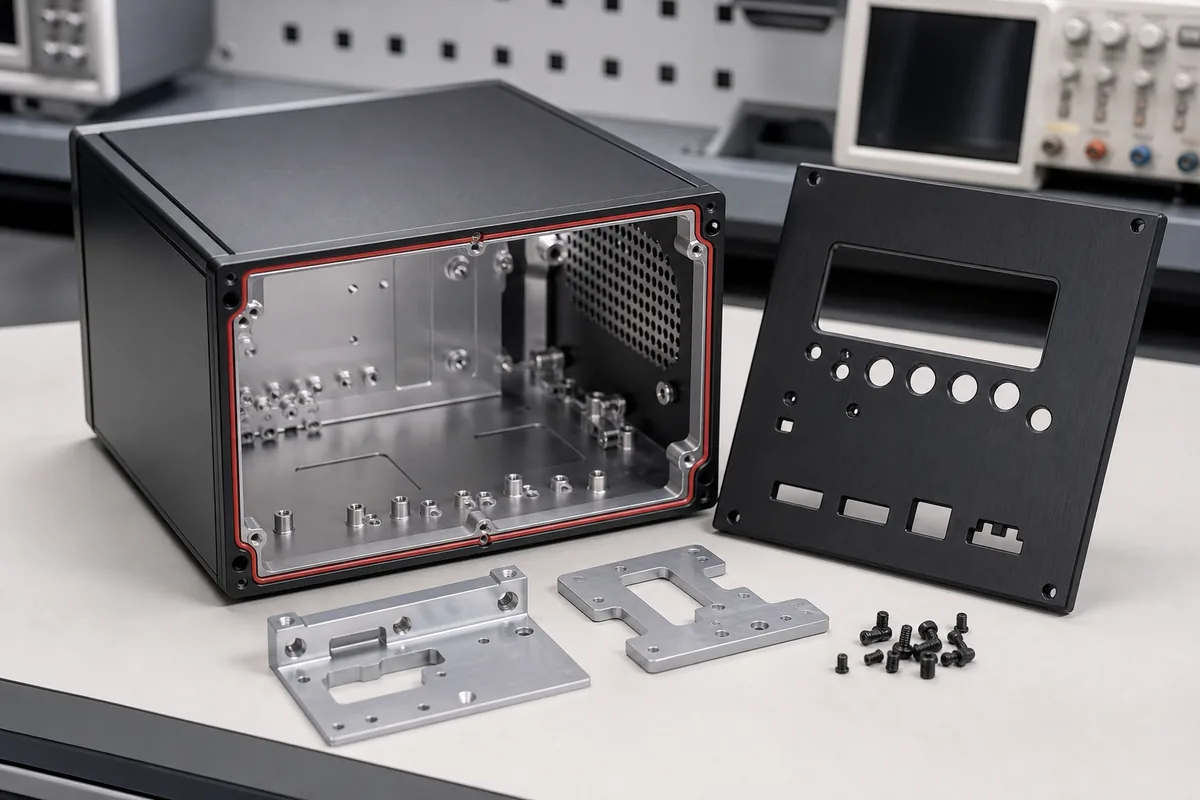
A thin-wall electronics housing must remain dimensionally stable while supporting boards, connectors, seals, heat paths and a controlled cosmetic finish.
Quick answer
What should a thin-wall electronics housing RFQ control?
Wall stability, board and connector location, sealing, grounding, heat paths and cosmetic finish should be reviewed as one manufacturing system.
- Identify distortion-sensitive walls, ribs, bosses and panels
- Provide the board, connector, cover, gasket and thermal stack
- Define finish, masking, cosmetic zones and post-finish inspection
Search intent coverage
Common project scopes
This page helps buyers evaluate requirements related to the following project scopes.
- 01thin wall CNC aluminum electronics housing
- 02cosmetic anodized enclosure machining
- 03precision consumer electronics chassis supplier
Buyer answers
Buyer questions for thin-wall electronics housings
Why do thin housings move after machining?
Material removal, residual stress and clamping can release distortion, especially across broad panels and abrupt wall transitions.
How should cosmetic requirements be communicated?
Define viewing zones, color, gloss, texture, allowable marks, finish samples and protective packaging on the controlled documentation.
Do machined dimensions prove an IP or EMC rating?
No. Dimensions support the design, but ingress and EMC requirements need separate assembled-product validation.
Technical content reviewed: October 2026.
Design wall thickness around load and process
Uniform walls are easier to stabilize than abrupt thick-to-thin transitions, but functional bosses, ribs and interfaces may still require local mass. Review tool reach, corner radii and material removal before locking the exterior design.
Broad thin panels can bow during roughing, unclamping or finishing. The route may use staged machining, stress relief, temporary stock, vacuum workholding or custom soft jaws depending on geometry.
Connect boards, connectors and external mounting
Board standoffs, connector openings, cover lands and external mounts should share a deliberate datum scheme. Oversized openings may hide variation but can compromise sealing, appearance or strain relief.
Provide the complete assembly stack, including gaskets, thermal pads, inserts, fasteners and cable keep-outs. Identify service-access requirements before reducing wall thickness.
Coordinate EMI, sealing and cosmetic finish
Mark conductive contact zones, gasket lands, masked areas and appearance-critical surfaces. Anodizing, conversion coating, paint or plating can change electrical contact, fits and sealing interfaces.
If an IP or EMC requirement applies, define product-level testing separately. Machined dimensions support the enclosure design but do not certify the assembled product.
Cosmetic and dimensional inspection
Define viewing zones, color range, gloss, texture, allowable handling marks and sample approval method. Cosmetic criteria should be objective enough for supplier and buyer to make the same decision.
Agree which flatness, position, thread, profile and assembly characteristics require reported values after finishing. Protective packaging should prevent part-to-part contact on visible surfaces.
Thin-wall electronics housing RFQ checklist
- Controlled housing, board and connector models
- Wall, rib, boss and workholding-sensitive regions
- Cover, gasket, grounding and thermal-interface stack
- Finish, masking and cosmetic acceptance zones
- Critical datums and post-finish inspection requirements
- Prototype quantity, production forecast and packaging method
Engineering references
Related CNC manufacturing pages
Technical content reviewed: October 2026.
Review your actual part
Send the model, drawing and requirements for a manufacturing assessment.